
21 Jan Why Pipes Burst in Freezing Weather and How to Prevent It (Texas Edition)
When Texas dips below freezing, homeowners start hearing stories about burst pipes, leaks, and surprise plumbing repairs. If you’ve ever wondered why pipes fail during cold weather and what you can do to prevent it. Here’s a quick breakdown that can save you stress, time, and money.
Why Freezing Temperatures Are Hard on Pipes
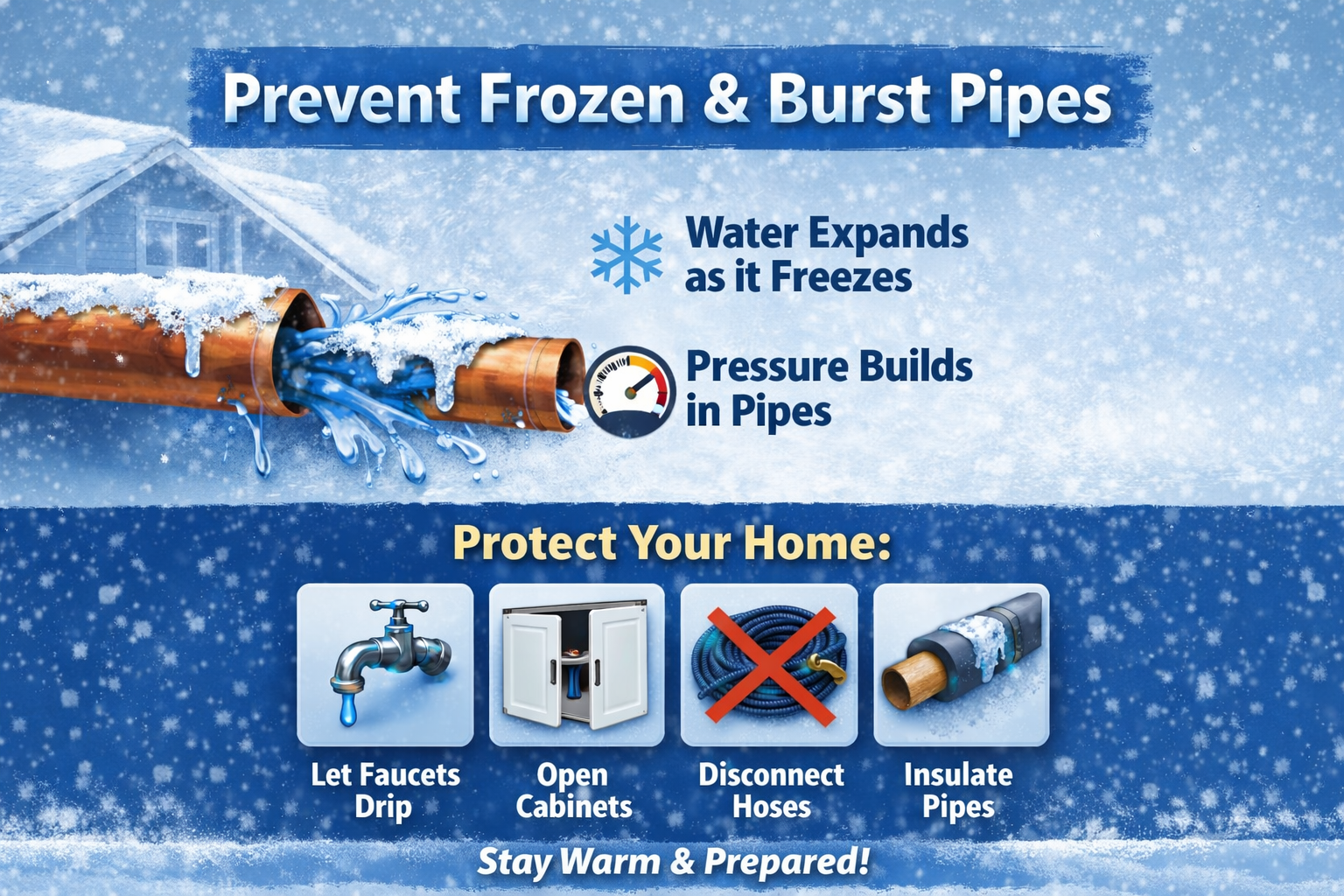
Water expands when it freezes
As water turns to ice, it takes up more space. Inside a closed pipe, that expansion creates pressure that can eventually force the pipe to crack.
Pressure builds where you least expect it
Interestingly, pipes rarely burst at the exact spot where they’re frozen. Instead, ice forms a blockage, pressure builds between the freeze point and the next closed faucet, and the pipe splits at a weaker section.
Texas homes are more vulnerable
Unlike northern states, many Texas homes have plumbing in:
-
Exterior walls
-
Attics
-
Garages
-
Crawl spaces
-
Uninsulated areas
These spaces cool down quickly during a freeze, making pipes more likely to freeze and burst.
Which Pipes Are Most at Risk
Exposed or uninsulated lines
Attics, outdoor hose bibs, and garage plumbing freeze first.
Rigid pipe materials
Copper and galvanized steel are more likely to crack due to expansion. PEX flexes better but fittings can still fail.
Low-use fixtures
Guest bathrooms, utility sinks, and backyard hose bibs sit stagnant longer. Stagnant water freezes faster.
Wind Matters: Cold Air vs. Cold Wind
Cold wind strips heat from exterior walls faster than static cold air. Even if temps barely hit freezing, strong wind can push exterior pipes over the edge, which is something Texans see often during winter storms.
Early Warning Signs Before a Burst
Before a pipe fully fails, you might notice:
-
Reduced water flow
-
No flow in certain fixtures
-
Frost or condensation on exposed lines
-
Unusual gurgling or banging sounds
-
Extra cold cabinet interiors
Catching these signs early can prevent bigger issues.
Preventing Frozen & Burst Pipes in Texas Homes
A few simple steps can make a huge difference during a freeze:
1. Keep faucets dripping
Moving water doesn’t freeze as easily and drips relieve pressure.
2. Open cabinets under sinks
Helps warm air reach pipes in exterior walls.
3. Maintain consistent indoor heat
Avoid big temperature drops overnight or while away.
4. Disconnect hoses
Leaving hoses attached traps water inside the outdoor spigot line.
5. Insulate exposed pipes
Foam sleeves, heat tape, or even towels during emergencies add protection.
6. Seal exterior drafts
Cold air sneaking in through hose bibs, vents, or cracks can freeze a section of pipe fast.
The Hidden Danger: When Pipes Thaw
Many homeowners think they’re in the clear once temperatures rise, but the thaw period is when leaks reveal themselves. A cracked pipe might not drip until the ice melts and pressure returns. This is one reason plumbers stay busy days after a freeze.
If You Suspect a Frozen Pipe
Quick action can prevent damage:
-
Turn off water at the main if you see active leaking
-
Gently warm the frozen area (hair dryer, space heater on low, or warm towels but never open flames)
-
Call a plumber if unsure where the freeze occurred
Final Thoughts
Texas may not freeze often, but every few years we get a cold snap that catches homeowners off guard. A little preparation goes a long way and can help you avoid costly plumbing repairs when temperatures drop.
No Comments